




A discount alone doesn't determine whether an ecommerce email gets opened or drives a purchase. Framing, audience intent, offer economics, and timing decide whether the promotion feels relevant or gets ignored. A large-scale analysis cited by MarketingProfs found that subject lines with loyalty incentive offers generated a 9% higher open rate, a 20% higher click rate, and a 12% higher click-to-open rate than subject lines without offers. The lesson is practical: value-specific wording can influence both attention and downstream engagement.
The seven models below organize discount email subject lines by customer motivation. You'll find percentage and dollar-off language, BOGO and free-shipping stacks, urgency, seasonal relevance, curiosity, personalization, and problem-solution framing. For each model, match the subject line to the segment, make the offer immediately understandable, write a preheader that adds information rather than repeats the subject, and test one meaningful variable at a time.
1. The Urgency and Specificity Formula
Urgency works best when the deadline and the value are both clear. “Sale ending soon” asks the subscriber to interpret the message. “40% off ends tonight at midnight” gives them the offer and the decision window in one scan.
Use this model for flash sales, cart recovery, seasonal clearance, and promotions with a genuine expiration. Examples include:
- 40% off ends tonight at midnight
- Your $25 discount expires in 48 hours
- 50% off, 48 hours only, no code needed
- Your Lash Sets discount ends tonight
The preheader should clarify the next action, such as “Use your offer before midnight EST” or “Your discount is already applied at checkout.” A precise preheader reduces the chance that the subject line's urgency feels like empty pressure.
Match the deadline to the segment
Cart abandoners can respond to a direct reminder tied to the product they considered. A broad subscriber audience may need a stronger reason to act, such as a seasonal sale or a limited collection. If you're testing discount depth, reserve stronger incentives for customers with clear purchase intent rather than sending the same offer to every contact.
Use specific time zones and dates where they matter. “Midnight EST” is more credible than “ends soon,” especially when customers shop across regions. The email body, landing page, promotion code, and checkout must all honor the same expiration.
Practical rule: Never manufacture urgency. A deadline that changes after the customer clicks damages trust more than a less aggressive subject line would.
Countdown timers can reinforce a legitimate deadline inside the email. See this guide to countdown timers in email for implementation context. Test a shorter window against a longer one, but change only the duration if timing is the question. Brands such as Gymshark and Everlane are useful creative references for consistent flash-sale framing, but your own audience should determine the final version.

2. The Curiosity Gap and Reveal Model
Curiosity-led subject lines trade immediate price clarity for a stronger reason to open. They withhold the discount amount, which can protect a premium brand voice when a blunt percentage would make the message feel transactional.
- Wait until you see what we saved for you
- Your exclusive offer is inside
- Open to your members-only discount
- A private offer for your next order
This model fits VIP customers, repeat buyers, and brands with a distinctive visual identity. Glossier and Away illustrate the polished, members-first presentation that can support this framing. A cold promotional send usually needs clearer value because subscribers have less context and may not open without seeing the offer.
Make the reveal immediate
Curiosity creates a clear delivery requirement. Put the discount or offer in the first line of the email, then repeat its value in the primary call to action. Editorial copy, product education, or a long hero animation before the reveal makes the subject line feel misleading.
The preheader should complete the promise without disclosing every detail. “Your private code is ready” tells subscribers what they will receive while preserving some curiosity. “Discover something special inside” is less useful because it offers no clear reason to open. Use deliberate email preview text to make the preview support the subject rather than repeat it.
Apply this model to a segmented list first. Loyal customers who recognize the brand voice are a practical starting group, while new or lightly engaged subscribers may need direct-value language. Compare the curiosity version with a subject line that states the discount amount, keeping the audience, offer, and send time consistent.
Browsing or purchase context can add relevance: A private offer for the products you viewed. The trade-off is personalization accuracy. Only reference viewed products when the event data is current and the offer applies to those items. For mobile inboxes, check how the subject and preheader read together before launch.
3. The Scarcity and Social Proof Combination
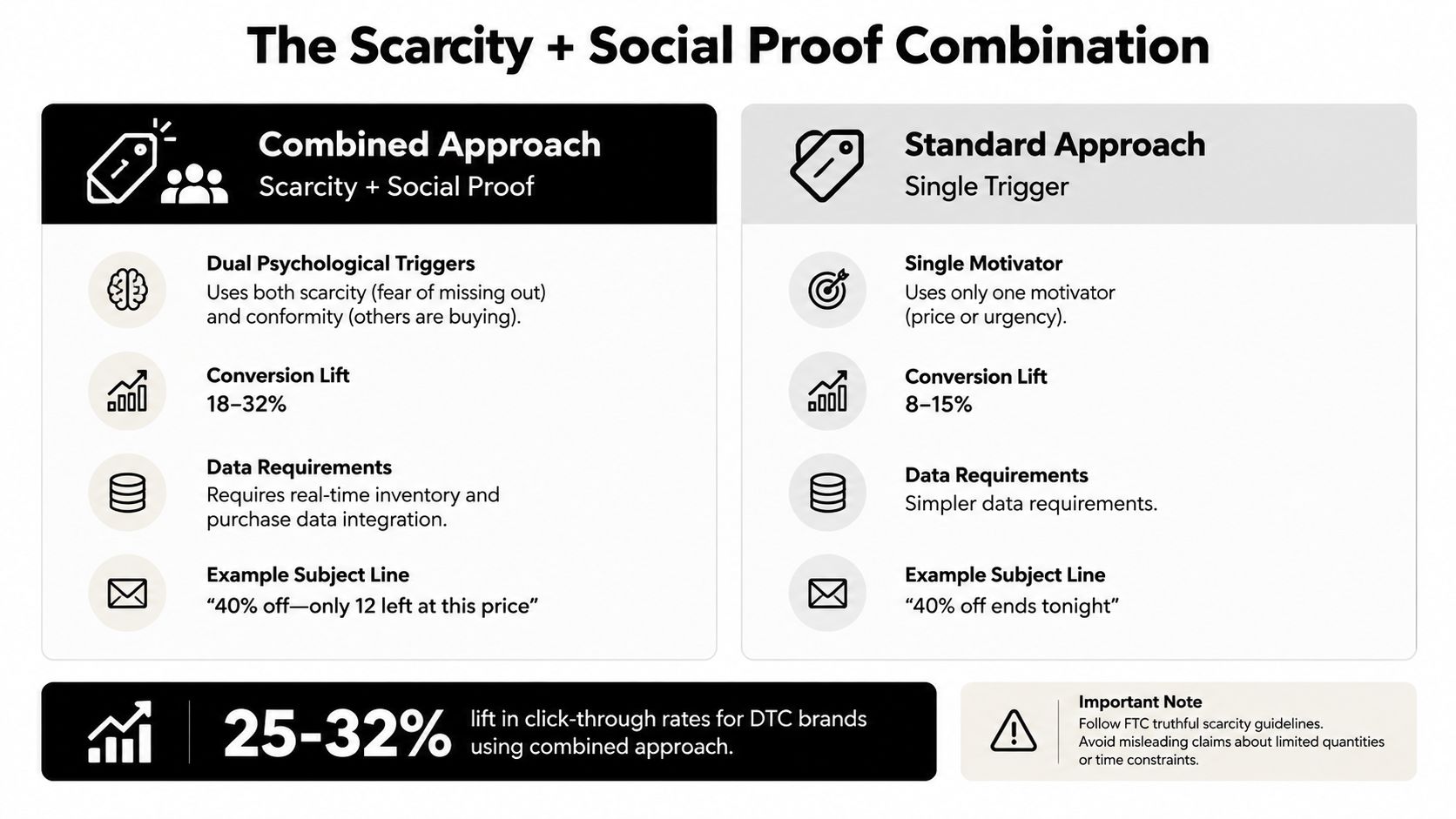
Use scarcity and social proof together when the offer depends on both availability and confidence. Scarcity signals that the opportunity may disappear. Social proof shows that other shoppers have already considered the product worth buying. The combination suits limited apparel drops, popular beauty launches, and products with constrained inventory.
Start with the motivation your audience needs most:
- Price-sensitive shoppers: 40% off, only 12 left at this price
- Browsers deciding on a product: Your dress is 35% off, 2,847 sold this week
- High-intent shoppers: Save 50%, last chance, only 8 in stock
- Community-oriented buyers: Join the shoppers who grabbed this limited drop
Brands such as Skims, ASOS, and Warby Parker operate in categories where popularity and availability can credibly shape the message. The trade-off is pressure versus trust. Stronger scarcity may lift opens, but inaccurate or manufactured urgency can damage confidence and reduce future response.
Make every proof point verifiable
Inventory counts, purchase totals, review numbers, and view activity should come from current product data. If the subject says only 8 in stock while the landing page shows abundant inventory, the inconsistency becomes visible at the moment of purchase. Connect the email platform to live catalog data where possible, and synchronize the landing page status.
Let the preheader explain the evidence without repeating the subject: “See customer favorites before the current stock sells through.” Use one scarcity cue and one relevant proof cue. Crowding the line with several unsupported numbers makes the offer harder to understand.
Run a focused three-way test: scarcity alone, social proof alone, and the combined version. Keep the offer, audience, and send time fixed, so the result isolates the motivation driving engagement. On the landing page, an exit-intent prompt can reinforce a genuine deadline. Never reduce an artificially available product to create pressure. Use promotional message examples to compare tones while keeping the claim accurate.
4. The Segment-Specific Personalization Template
Segment determines the discount's reason, framing, and next action. A welcome offer should reduce first-order hesitation, while a win-back message must acknowledge inactivity. Cart and post-purchase emails need product context, but each requires different safeguards.
Start with the customer situation, then match the subject line to the motivation:
- New customer: First order? Claim your 20% welcome discount
- Repeat customer: VIP access, 40% off your favorites today
- Inactive customer: We miss you, here's 25% to come back
- Cart abandoner: Your [specific product] is still waiting, 15% off now
- Post-purchase: Complete the look, 30% off recommended items
Use an offer that fits the segment. A welcome percentage can lower acquisition friction, a repeat-customer discount can recognize prior value, and a cart incentive can address purchase hesitation. For inactive customers, the trade-off is reactivation versus margin. Avoid presenting every audience with the same discount, since a stronger incentive may train active buyers to wait.
The preheader should add context rather than repeat the subject. For a new customer, explain eligibility and redemption. For a cart abandoner, confirm the product and clarify the offer window. For a post-purchase cross-sell, name the category or use case without implying a recommendation based on data the customer never shared.
Personalization can use recent browsing, prior purchases, loyalty status, or cart contents, provided those fields are reliable. Keep fallback text for missing product names, expired inventory, and changed preferences. A mistaken product reference feels careless and can make relevant targeting feel invasive. Review these email personalization techniques when setting rules for data use and fallback copy.
Build segments for new, repeat, inactive, VIP, and high-value customers before launch. Test one segment-specific subject against a generic control while holding the offer and send time constant. Measure clicks and revenue alongside opens, since a personalized subject can attract attention without improving sales.
For broader implementation, apply these data-driven personalization tactics to keep segment logic connected to catalog, consent, and lifecycle data.
5. The Exclusivity and Access Framing Model
Exclusivity makes a discount feel like a membership benefit rather than a public markdown. It activates recognition and belonging, so it fits loyalty programs, repeat-customer campaigns, product launches, and private sale windows.
Use the model when the recipient can clearly qualify for access:
- VIP early access, 40% off tomorrow's launch
- Insider access, your exclusive sale starts now
- Members only, 25% off plus free shipping
- Loyalty reward, 35% off for repeat customers
The audience should recognize the program name from the website, account area, and prior emails. Sephora's Rouge tier and Lululemon's membership ecosystem show how access can become part of an ongoing customer relationship. If the program uses “Insiders,” “Inner Circle,” or “VIP Collective,” repeat that exact language instead of introducing a new label.
Make access tangible
A private subject line needs a private benefit. Give members earlier shopping access than the wider audience, or attach a perk unavailable in the public promotion. The preheader should state the difference plainly: “Shop the new collection before public launch.” Avoid vague selection language that does not explain what the recipient receives.
Offer stacking can strengthen the message, but it can also bury the primary benefit. Pair the discount with free shipping, free returns, birthday benefits, or another loyalty perk, then put the member access first in the subject line and the secondary advantage in the preheader.
For the focused test, compare an exclusivity-led subject with an urgency-led subject using the same audience, offer, and send time. “VIP access starts now” tests belonging and recognition. “Sale ends tonight” tests time pressure. Measure clicks and revenue, not opens alone, because access language may strengthen retention without producing the highest initial open rate.
Keep the loyalty program in the footer. Non-members can then see how to qualify for future access, while current members receive a clear reason to stay engaged. The ethical boundary is simple: reserve the stated benefit for the segment that earned it, and do not imply private access if the same offer is already public.
6. The Problem-Solution-Discount Narrative Arc
A problem-solution subject line makes the discount answer a specific customer frustration. It names the issue, connects the product to a practical outcome, then reduces the hesitation to try it.
- Dark circles? Try our eye serum at 30% off
- Shipping costs eating profits? Save 25% on bulk orders
- Tangled hair ruining your morning? Detangler is 40% off
- Back pain from your home office? Save on ergonomic desks
Use this model for products with a clear use case, such as skincare, haircare, office equipment, replenishment goods, and problem-solving accessories. It fits shoppers already aware of a need, while a price-only subject line may reach a broader but less motivated audience. Brands such as Allbirds, Bombas, and Oura illustrate value-led messaging that frames products around customer outcomes.
Build from the customer's wording
Review reviews, support tickets, surveys, and product questions for recurring frustrations. “I'm tired of replacing this every month” creates stronger copy than “enhanced product efficiency.” Keep the discount in a supporting role so the solution remains clear.
Write the preheader as the next step in the story: “A simpler routine starts with the right formula” or “Stock up without paying the usual bulk-order price.” Avoid medical outcomes or guaranteed results unless the product claims and compliance process support them.
The ethical constraint is direct: describe a problem the product can reasonably address, without turning ordinary discomfort into a serious condition. Match the promise to product evidence and explain usage in the email.
For a focused A/B test, keep the product, discount, audience, and send time unchanged. Compare problem framings such as running out, waste, discomfort, and cost. Measure clicks, conversion, and revenue, then check whether the chosen framing attracts customers who use the product as intended. Add educational content that demonstrates the stated solution.
Context can improve relevance. A detangler offer before humid weather or an ergonomic desk promotion during a workspace refresh gives the problem a timely reason to act. The strongest version makes the customer recognize the need before noticing the price.
7. The Limited-Time Bundle or Offer Stacking Model
Offer stacking works by making the total benefit easier to compare than a single discount. It suits higher-value campaigns, curated bundles, seasonal gifting, and products where a larger basket improves the economics. Glossier, FabFitFun, and Sephora use bundled value and multiple benefits in promotional merchandising.
Lead the subject line with one clear customer motivation, usually saving more or completing a purchase in one step. Mention the supporting rewards without turning the preview into a list of terms.
- Free shipping plus 25% off plus a free gift
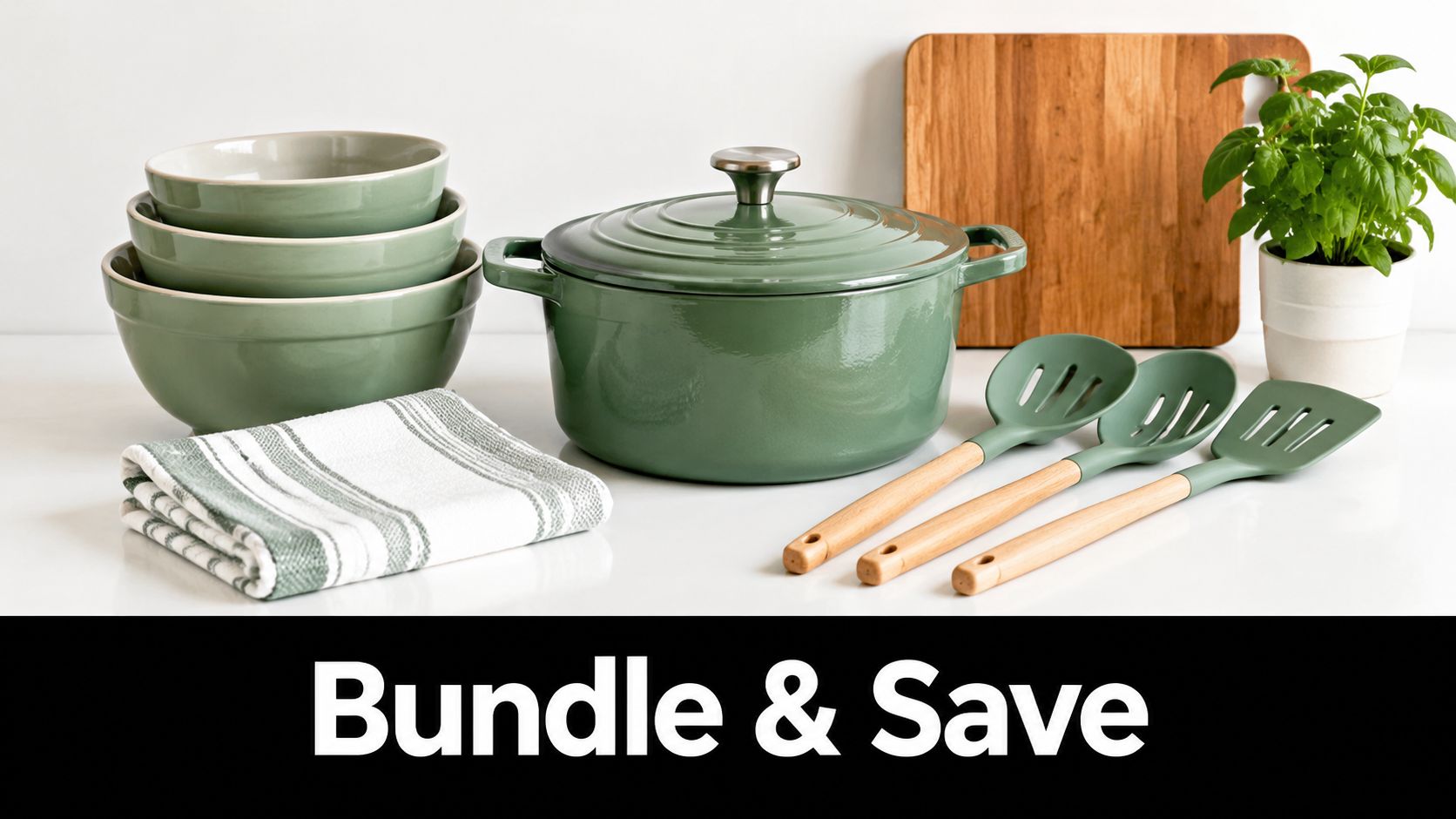
- Bundle and save, buy 2 and get 20% off
- 40% off plus BOGO socks and priority shipping
- Complete your set, save 30% and get a mystery gift
The offer type should match the audience. A complete-the-set message fits shoppers who already own part of a collection. A free-gift stack can suit gift buyers, while free shipping plus a discount may work better for price-sensitive customers. Choose the subject line around the action you want, not the number of incentives available.
Make the stack easy to understand
Put the primary incentive first. Use the preheader to supply the next benefit, such as “Today only, get the gift automatically at checkout.” In the email, separate the discount, gift, shipping terms, eligible products, exclusions, and expiration with clear visual hierarchy.
Check contribution margin before launch. A percentage discount combined with free shipping, a gift, and upgraded delivery can reduce profit quickly. Pair lower-margin products with higher-margin additions, and use one expiration for the full offer so customers do not have to interpret separate deadlines.
The ethical constraint is accuracy. Show the actual qualifying products, state whether rewards apply automatically, and avoid calling an offer limited if inventory or timing is not restricted.
Run one focused test: compare a two-benefit stack with a three-benefit stack while keeping the audience, products, and deadline unchanged. Measure clicks, conversion, revenue, and margin. “Today only, get the full bundle” gives the complete offer one deadline, which is clearer than assigning separate end times to shipping, the gift, and the discount.
7-Point Comparison: Discount Email Subject Lines
| Strategy | 🔄 Implementation Complexity | ⚡ Resource Requirements | 📊 Expected Outcomes | 💡 Ideal Use Cases | ⭐ Key Advantages |
|---|---|---|---|---|---|
| The Urgency + Specificity Formula | Low, simple templates; optional countdown timer | Low, copy + occasional timer, accurate time-limited pricing required | 15–25% conversion lift; immediate sales spikes; risk of fatigue | Flash sales, cart abandoners, broad ecommerce promos | Creates FOMO, transparent, easy to A/B test |
| The Curiosity Gap + Reveal Model | Medium, needs strong design and on-open delivery | Medium, compelling copy/design and segmentation for VIPs | Open lift ~10–18%; conversion lift 8–15%; preserves intrigue | Premium brands, VIP offers, storytelling-led campaigns | Higher opens, differentiates brand messaging |
| The Scarcity + Social Proof Combination | High, requires live inventory/purchase integration | Medium–High, engineering for real‑time data, accurate counts | Conversion lift 18–32%; CTR lift ~25–32%; high impact if truthful | Limited drops, high-demand SKUs, DTC launches | Dual triggers (scarcity + conformity) boost urgency |
| Segment-Specific Personalization Template | High, CRM/segmentation, dynamic tokens; 2–4 week setup | High, clean data, platform capability, ongoing testing | Open +20–35%; conversion +15–25%; reduces unsubscribes | Loyalty programs, lifecycle emails, high-value cohorts | Highly relevant messaging, tiered discounting, stronger retention |
| The Exclusivity + Access Framing Model | Medium, needs membership/tier infrastructure | Medium, program management, consistent member benefits | Conversion lift 18–28%; loyalty +35–50% LTV impact | Luxury/premium brands, subscription/loyalty programs | Raises perceived value, attracts higher‑LTV customers |
| The Problem-Solution-Discount Narrative Arc | Medium–High, requires customer research and tight copy | Medium, research (surveys/reviews), content and testing | Open lift 25–40% vs pure discount; conversion 20–35% | Solution-focused categories, seasonal or high-consideration buys | Builds emotional resonance; positions brand as problem‑solver |
| The Limited-Time Bundle or Offer Stacking Model | Medium, coordinate multiple incentives and clear copy | Medium, margin modeling, creative execution, fulfillment alignment | AOV +15–30%; conversion lift 12–20%; watch margin compression | Bundles, upsell/cross-sell, product complement promotions | Increases basket size, perceived value, encourages larger purchases |
Turn Subject-Line Ideas Into a Repeatable Test Plan
Start with the customer situation, not the cleverest phrase. Map each offer to the segment most likely to value it, whether that's a new subscriber, recent browser, cart abandoner, repeat buyer, lapsed customer, or loyalty member. A high-intent shopper may need a clear product reminder, while a loyal customer may respond better to early access or a private reward.
Write one subject line and one preheader as a pair. The subject should communicate the primary motivation, and the preheader should add the missing detail. For example, “VIP early access, 40% off tomorrow's launch” can pair with “Shop before the public release, with free shipping included.” Don't repeat the same words in both fields.
Before sending, verify every factual promise. Confirm that the discount applies to the advertised products, the expiration matches the landing page, inventory claims are current, and any personalization token has a reliable fallback. Review the message on mobile to see whether the percentage, dollar amount, product name, and deadline survive truncation.
Define the primary success metric before the test. Open rate helps evaluate attention, but clicks, conversion rate, revenue, and margin reveal whether the subject line attracted the right shoppers. A subject line that earns curiosity opens but produces weak clicks may be less valuable than a direct offer that attracts fewer but better-qualified visitors.
Test framing rather than changing several variables at once. Compare percentage-off language with dollar-off language, direct value with curiosity, or urgency with exclusivity. You can compare Version A vs Version B while keeping the audience, offer, send time, and creative consistent.
For teams that need support beyond copy, Ecommerce Boost offers campaign planning, segmentation, lifecycle flows, creative testing, deliverability support, and reporting for ecommerce brands. Its approach connects subject-line tests with broader customer journeys, including welcome, browse recovery, cart recovery, post-purchase, and win-back campaigns.
Ecommerce Boost can help your team turn discount email subject lines into segmented campaigns with coordinated preheaders, lifecycle flows, A/B tests, and performance reporting. Visit Ecommerce Boost to review its ecommerce email marketing services and explore a consultation for your next promotional campaign.


